Signed in as:
filler@godaddy.com
Tires can be a great reusable resource. They can be recycled and manufactured into rubberized asphalt, running tracks, floor mats, rubber mulch used for playground surfaces and many other products.
Where to Recycle or Properly Dispose of Tires

There are several options you can do with left over scraps and food waste in order to minimize your environmental impact.
1.) Compost:
Turn fruit, vegetable scraps, coffee grounds, and eggshells into rich soil.
2.) Donate or drop off at food waste drop off sites:
The West Lafayette Street and Sanitation Department at 705 S. River Road in West Lafayette has a 24/7 pubic food waste drop-off.

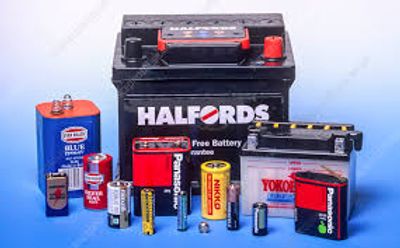
Batteries must be recycled or dispose of in compliance with U.S. environmental regulations.
Single-use household batteries (AA, AAA, C,D, 9V) can be placed in the trash but preferably recycled.
These types should be recycled and dropped of at a Household Hazardous Waste drop off site: Car batteries, Lithium, Lithium-Ion, Nickel Metal Hydride, Nickel Cadmium, Lead-acid batteries, UPS batteries.
All the mentioned above batteries (Not household batteries) can be dropped off at the household hazardous waste drop-off, located at the transfer station at 2770 North 9th Street. It is open MWF 7am - 4pm, Tuesday, Thursday 7am - 6pm, and Saturday 7am - 1pm.
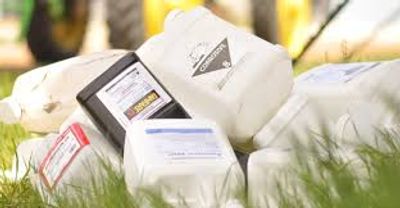
It is important to dispose of empty containers properly to prevent chemical contamination of soil and water.
When disposing of empty containers, you should do the following:
Pesticides and poisons are accepted at the household hazardous waste drop-off located at the transfer station at 2770 North 9th Street. It is open MWF 7am - 4pm, Tuesday, Thursday 7am - 6pm, and Saturday 7am - 1pm.
Other option for pesticides include:
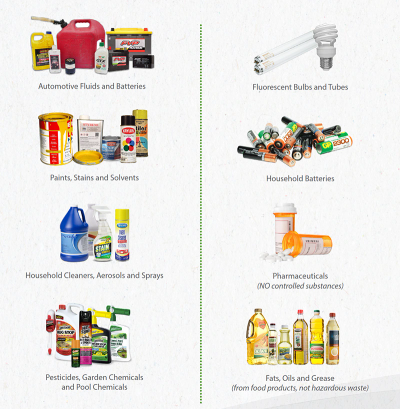
Household Hazardous Waste (HHW) are leftover products that contain corrosive, toxic, ignitable, or reactive ingredients. Under certain conditions they can catch fire, react, or explode. Common HHW items include paints, cleaners, oils, batteries, lights, and pesticides. These items may contain labels such as Corrosive, Caution, Combustible, Danger, Flammable, Poison, Toxic, and Warning.
HHW should be taken to the Tippecanoe County Solid Waste Management District (located at the transfer station at 2770 North 9th Street.) where it will be processed for proper hazardous waste disposal. It is open MWF 7am - 4pm, Tuesday, Thursday 7am - 6pm, and Saturday 7am - 1pm. The majority of HHW is accepted free of charge.
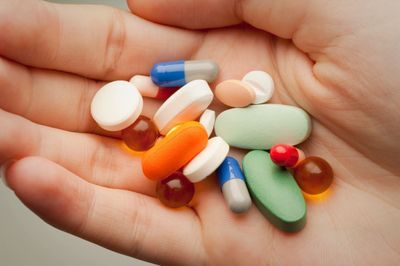
Proper disposal of wanted medicine is important to prevent pollution in the environment, and prevent illegal use or theft. The best ways to dispose of unwanted medicine is through drug take-back programs organized by pharmacies or communities. The U.S. Drug Enforcement Administration (DEA) website has additional information about controlled substances and national Take Back Days.
If Collections Aren't Available in Your Community?
Do not flush medicine or pour them down the drain. When flushed down the drain, chemicals from the medication can enter water resources affecting marine life.
If you must throw away unwanted medicine follow these instructions to protect your community and the environment:
1.) Remove medicine from its container and mix it with other unpleasant garbage such as kitty litter or flour. Do not crush pills or capsules.
2.) Remove labels from prescription bottles or completely mark out all patient information.
3.) Place the mixture into a sealable plastic bag or a sealed container that won't leak and dispose in the trash.